TABLE OF CONTENTS
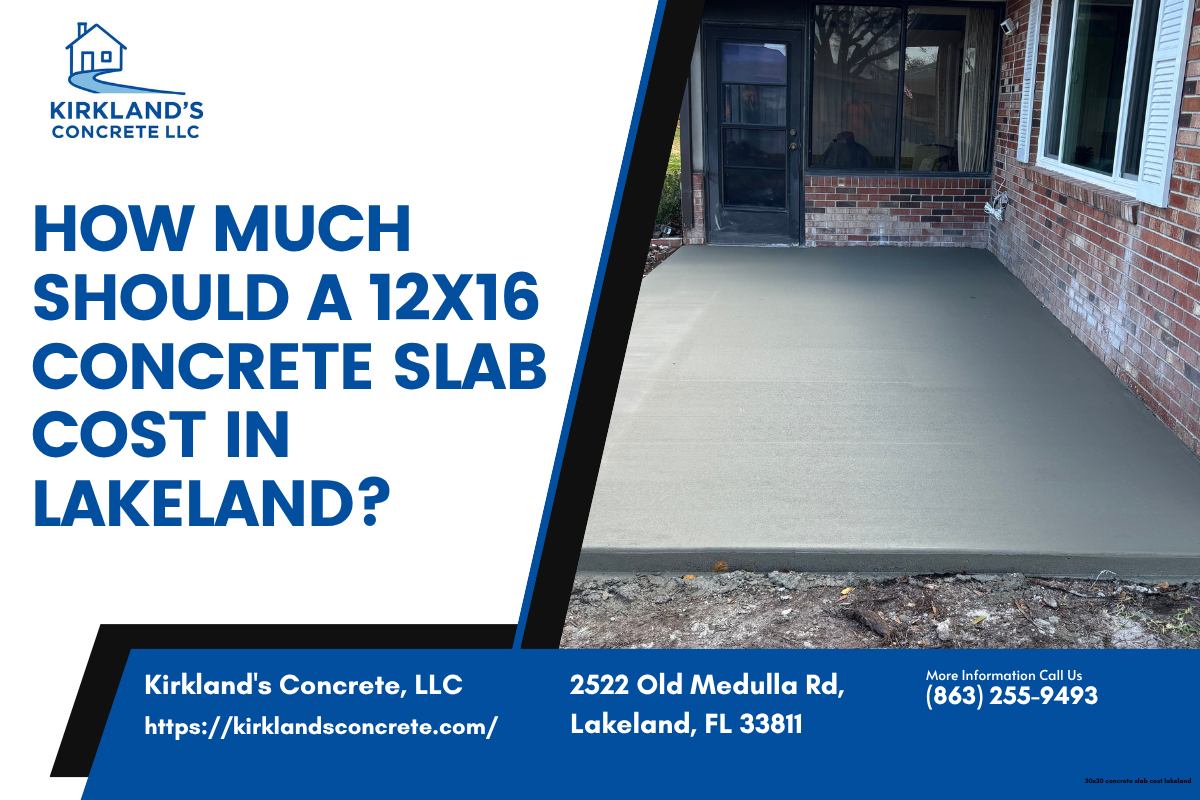
In Lakeland, hiring a professional concrete company for a standard 12x16 concrete slab (192 sq ft) can cost anywhere from $1,500 for a simple patio to over $4,500 for a workshop-ready foundation. The final price depends less on the size and more on the slab’s intended use, thickness, reinforcement, and specific Central Florida site preparation needs.
The Most Important Question Isn't "How Much?" but "For What?"
Here at Kirkland's Concrete, we’ve been pouring concrete across Polk County for decades. From the historic districts near Lake Morton to the growing communities out towards Winter Haven, we get asked one question more than any other: "How much for a 12x16 concrete slab?" It's a fair question. You have a project in mind—a new shed foundation, a patio for your grill, or maybe a dedicated workshop—and you need a concrete project budget.
While many will give you a quick price per square foot, that number is often misleading. The truth is, the cost of a 192 sq ft slab in Lakeland, FL, is fundamentally tied to its job description. A slab designed to support a few patio chairs and a grill has vastly different engineering requirements than one built to handle a 2,000-pound lathe or the constant weight of a classic car. Our core thesis is simple: for a 12x16 concrete slab in Lakeland, the most critical cost question isn't 'how much per square foot,' but 'how much for the intended purpose.'
This guide will break down the real factors that influence your concrete slab estimate, from our unique soil conditions here in Central Florida to the non-negotiable elements of a foundation built to last a lifetime.
Matching the Slab to the Mission: A Cost Comparison
Let's analyze three common scenarios for a 12x16 concrete pad. Notice how the specifications—and therefore the costs—change dramatically based on the intended use. This is where a generic concrete cost calculator falls short, as it can't account for these critical nuances.
Scenario 1: The Light-Duty Patio Slab
- Intended Use: Backyard patio for furniture, foot traffic, a small garden shed foundation.
- Load-Bearing Requirements: Low. Designed to support people and lightweight outdoor items.
- Typical Thickness and Reinforcement: A 4-inch thick slab is the standard. Reinforcement is typically light wire mesh to control shrinkage and temperature cracking.
- Site Preparation Needs: Standard excavation and grading, with a compacted gravel base (sub-base) of about 4 inches. A vapor barrier is less critical but still recommended.
- Approximate Cost Range in Lakeland (2026): $1,500 - $2,400. This covers basic site prep, materials including ready-mix concrete delivery, labor costs for concrete work, and a standard broom finish concrete texture.
Scenario 2: The Heavy-Duty Workshop/Garage Slab
- Intended Use: Foundation for a workshop, a garage for a single vehicle, or a base for heavy equipment.
- Load-Bearing Requirements: High. Must support significant point loads (heavy machinery, tool chests) and resist vibration.
- Typical Thickness and Reinforcement: A 6-inch thick slab is the minimum. Reinforcement is upgraded to a grid of steel rebar reinforcement for true structural strength.
- Site Preparation Needs: More extensive excavation may be needed. A thicker, meticulously compacted sub-base is essential. A high-quality vapor barrier is mandatory to protect tools and equipment from ground moisture.
- Approximate Cost Range in Lakeland (2026): $2,800 - $4,500+. This reflects the significant increase in concrete material costs (50% more concrete volume), the higher cost of rebar over mesh, and the additional labor for a more robust foundation slab.
Scenario 3: The Specialized-Use Slab (RV Pad / Hot Tub Pad)
- Intended Use: A dedicated pad for a heavy RV, a large boat, or a hot tub.
- Load-Bearing Requirements: Extreme. Must support immense, concentrated weight without cracking, sinking, or shifting. An RV can place thousands of pounds on just four tires.
- Typical Thickness and Reinforcement: Often requires a 6-inch slab with thickened edges (up to 12 inches deep around the perimeter) to act like a built-in footing. Heavy-duty rebar grid is essential.
- Site Preparation Needs: Meticulous site preparation is paramount. This includes ensuring proper drainage solutions to channel water away from the slab and a perfectly compacted base to prevent any settling under the immense load.
- Approximate Cost Range in Lakeland (2026): $3,500 - $5,500+. The cost is driven by the sheer volume of concrete, the extensive rebar work, and the precision required in the site prep and forming stages.
Deconstructing the 'Workshop Premium': Why a Stronger Foundation is a Smart Investment
You can see from the estimates above what we call the "Workshop Premium." A slab for heavy machinery can easily cost 50-75% more than a standard patio slab of the exact same 12x16 dimensions. This isn't about upselling; it’s about engineering the slab for its specific purpose. Skimping here can lead to catastrophic failures down the road.
Thickness, Volume, and Material Costs
A 12-foot by 16-foot slab is 192 square feet. Let's look at the concrete volume required, which is measured in cubic yards.
- A 4-inch thick slab (192 sq ft x 0.333 ft deep) requires 2.37 cubic yards of concrete.
- A 6-inch thick slab (192 sq ft x 0.5 ft deep) requires 3.56 cubic yards of concrete.
That's a 50% increase in the volume of ready-mix concrete needed. With ready-mix concrete prices in the Lakeland and Bartow area hovering around $150-$200 per cubic yard (or yd³), that additional 1.19 yards adds a significant amount to the concrete material costs before we even consider labor or reinforcement.
The True Cost of Vibration and Cracking
For a hobbyist or professional working with heavy machinery, the foundation is part of the tool. A thin, unreinforced slab will flex and vibrate under the operation of a lathe, CNC machine, or vehicle lift. This vibration doesn't just feel unstable; it can damage the expensive equipment itself, throwing off calibration and causing premature wear.
This is where a properly engineered monolithic slab or floating slab foundation becomes a form of long-term insurance. The investment in a 6-inch slab with a robust rebar grid creates a rigid, stable platform that absorbs and dampens vibration. In fact, for extremely heavy or sensitive equipment, many experts recommend going even further. To support heavy equipment like a lathe and prevent vibration, one user in a woodworking forum suggests building pad footings into the soil that are a minimum of 8 inches thick and at least 16x16 inches square, directly under the machine's contact points according to industry discussions. This highlights that a "workshop" isn't just a shed; it's a purpose-built facility. The infrastructure needs to match, just as a woodturner building a small 10x12 workshop installed a 240v, 60a electrical sub-panel—a clear sign that specialized uses require significantly more robust infrastructure than a simple outbuilding.
The Lakeland Difference: Why Central Florida Site Prep Matters
National average cost calculators fail miserably for us here in Lakeland. Why? They don't account for our unique ground conditions. Pouring concrete in the sandy soils of Polk County is very different from pouring on the hard clay of Georgia or the rocky terrain of the Northeast.
Working with Sandy Soil and a High Water Table
Central Florida's sandy soil is fantastic for drainage but terrible for stability if not handled correctly. It requires aggressive mechanical compaction to create a solid sub-base that won't settle or shift over time. Simply dumping gravel and pouring concrete over it is a recipe for a cracked and uneven slab within a few years. Any reputable licensed concrete contractor in Lakeland will spend significant time on excavation and grading to ensure the base is perfectly level and compacted.
Furthermore, our high water table means ground moisture is a constant battle. For any residential concrete slab that will have a structure on it—especially a workshop where you'll store expensive, rust-prone tools—a high-quality vapor barrier is not optional. This thick plastic sheeting is laid over the gravel base before the concrete pouring begins, preventing moisture from wicking up through the porous concrete and creating a damp, damaging environment inside your new space.
Permits and Codes
Depending on the slab's purpose and location within Lakeland city limits or unincorporated Polk County, building permits may be required. A professional contractor will be familiar with the Florida Building Code requirements for foundation slabs, ensuring that everything from thickness to reinforcement and control joints meets local standards for safety and durability.
Beyond Price Per Yard: Your Checklist for Hiring Lakeland Concrete Contractors
When you start to get concrete quotes, you’ll quickly see that not all estimates are created equal. To ensure you're comparing apples-to-apples for a performance-oriented slab, you need to ask the right questions. Arm yourself with this checklist before you call any Central Florida concrete services.
- What PSI concrete will you be using? PSI stands for "pounds per square inch" and measures the concrete's compressive strength. For a simple walkway, 3000 PSI concrete might be adequate. For a workshop or driveway extension that needs to bear weight, you should insist on a minimum of 4000 PSI concrete.
- What is your rebar grid spacing? If your project requires rebar, ask about the spacing. A 24-inch grid is good; an 18-inch grid is better. The smaller the grid, the stronger the slab. This is a key detail that separates a premium job from a budget one.
- How will you prepare and compact the sub-base? A professional will talk about using a plate compactor on both the native soil and the gravel base to achieve proper density. Vague answers are a red flag.
- Is your quote all-inclusive? Ask if the price includes concrete forms, finishing (e.g., trowel finish or broom finish), cutting control joints to manage cracking, the application of a curing compound, and the final haul away of debris. These items can add up if they aren't in the initial concrete slab estimate.
- Are you a licensed and insured contractor in Polk County? This is non-negotiable. It protects you from liability and ensures the contractor is accountable for their work.
Frequently Asked Questions About Concrete Slabs
Let's tackle a few more common questions we hear from homeowners in the Lakeland area.
How many bags of concrete do I need for a 12x16 slab?
This is a popular question for those considering a DIY concrete slab. A 12x16 (192 sq ft) slab at a standard 4-inch thickness requires 2.37 cubic yards of concrete. An 80-lb bag of a mix like Quikrete or Sakrete yields about 0.6 cubic feet of concrete. To get 2.37 cubic yards (which is 64 cubic feet), you would need approximately 107 bags. For a 6-inch slab, you'd need over 160 bags. While renting a concrete mixer is possible, mixing, pouring, and finishing that much concrete by hand before it starts to set is an exhausting, back-breaking job for even a team of experienced DIYers. For any project of this scale, a professional concrete delivery from a local ready-mix supplier is the only way to ensure a consistent, high-quality mix and a successful pour.
What is poor man's concrete?
The term "poor man's concrete" typically refers to a mix-it-yourself blend of Portland cement, sand, and sometimes gravel, often mixed right on the ground or in a wheelbarrow. While it can be a solution for very small, non-structural projects like a post footing or a tiny HVAC pad, it's completely unsuitable for a structural foundation slab like a 12x16 pad. The lack of quality control, inconsistent water-to-cement ratio, and difficulty in mixing a large volume result in a weak, unreliable slab that is prone to cracking and failure.
How much does it cost to build a 16x20 concrete slab?
A 16x20 slab is 320 sq ft, significantly larger than our 12x16 example. All the principles we've discussed still apply, but on a larger scale. A simple 4-inch thick patio of this size (requiring nearly 4 cubic yards of concrete) might cost between $2,500 and $4,000. However, a 6-inch thick, rebar-reinforced 16x20 workshop foundation (requiring almost 6 cubic yards) could easily cost $5,000 to $7,500 or more, especially if site conditions are challenging. The "Workshop Premium" scales right along with the size of the project.
The Kirkland's Concrete Commitment: Our Promise to You
For us, pouring concrete in Lakeland is more than a job; it's about building lasting value for our neighbors. We understand that a new patio, workshop, or walkway installation is a significant investment in your home. That's why we approach every project with a commitment to transparency and quality. We don't believe in one-size-fits-all solutions. We take the time to understand your specific needs so we can design and build a concrete slab that is perfectly suited for its purpose.
It's a philosophy that guides every member of our team. As our founder always says, "We Build Spaces Like They're At Our Own Home." That means using the right mix, the right reinforcement, and the right preparation techniques, every single time.
Making the Right Choice for Your Needs
So, what is the right choice for your 12x16 project? The answer lies in your specific goals, budget, and long-term plans.
For The Homeowner
If you need a simple, cost-effective 12x16 slab for a backyard patio or a small garden shed, your primary concerns are likely appearance and basic durability for foot traffic. A professionally installed 4-inch thick slab with wire mesh and a clean broom finish is an excellent, reliable choice that will provide decades of service without over-investing in strength you don't need.
For The Hobbyist Woodworker/Mechanic
If you're building a workshop for heavy, vibrating equipment like a lathe, mill, or vehicle lifts, consider the extra cost of a heavy-duty slab as part of the investment in your tools. Your primary concerns are thickness, reinforcement to prevent cracking, and a perfectly level surface. You need a 6-inch thick, 4000 PSI slab with a rebar grid and a vapor barrier. The upfront cost is higher, but it protects your valuable equipment and ensures a safe, stable working environment for years to come.
For The RV Owner
If you need a 12x16 slab to support the concentrated weight of a recreational vehicle, your focus must be on extreme durability. The standard slab won't do. You need to discuss an engineered solution with your contractor, likely involving a 6-inch or thicker slab, heavy-duty rebar, and thickened edges to handle the immense load without cracking or settling. Proper drainage is also critical to protect your investment.
Ultimately, the best concrete slab is the one engineered correctly for its intended job. Understanding the "why" behind your project is the first and most important step in determining the true cost. For a personalized assessment of your project's unique needs and a free, transparent quote, contact our expert team at Kirkland's Concrete today. We're here to help you build your Lakeland project on a foundation you can trust.

Featured Posts